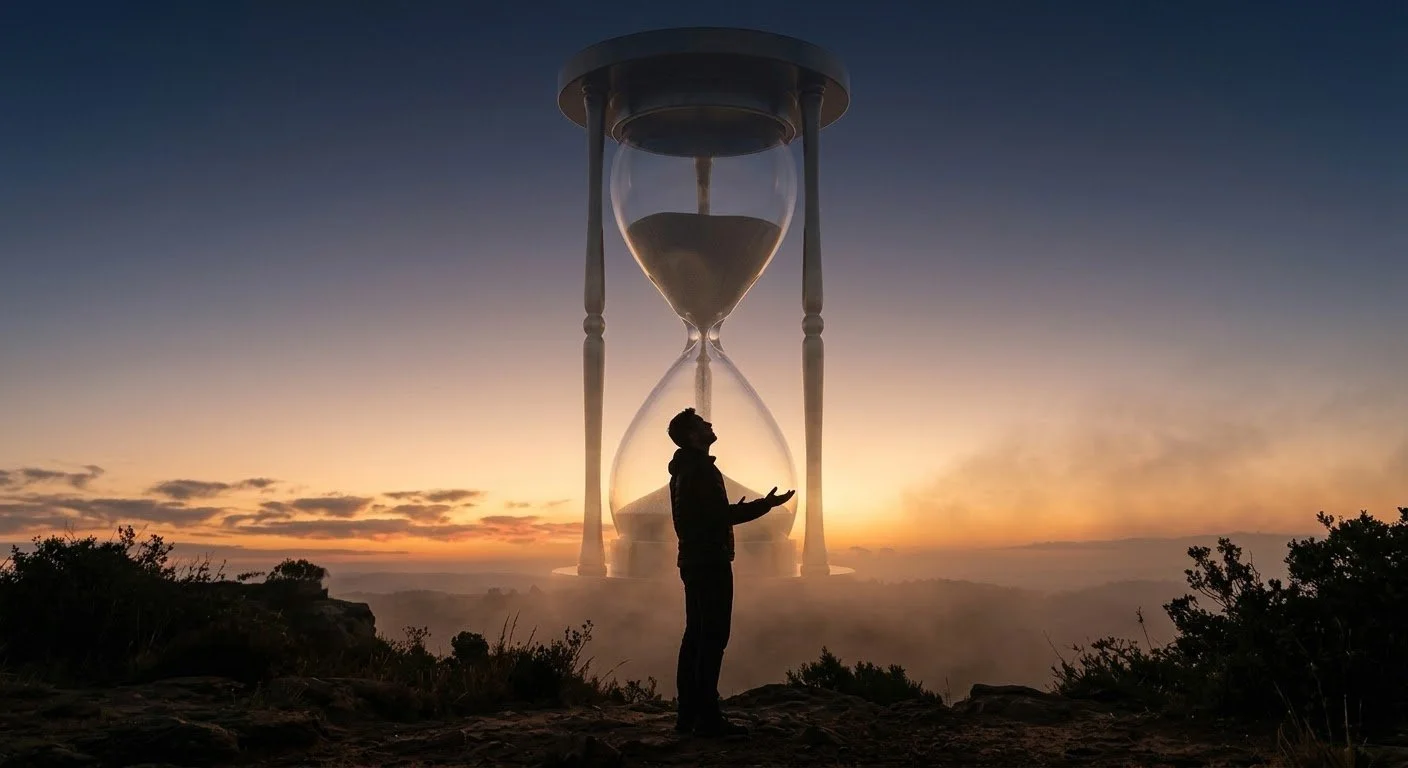
Now I understand it’s true value.
When I was young, time seemed like something I had an unlimited supply of. There was always tomorrow, next week, next year, or some distant point in the future when I would finally get around to doing the things I had been putting off.
I never gave much thought to growing old. That was something other people did. People with gray hair, reading glasses, and an unusual fascination with the weather.
Now, approaching sixty, I’ve discovered that I’ve become one of those people. And yes, I check the weather more often than I care to admit.
But something else has changed, something far more important than my age.
I’ve begun to understand the value of time.
Not simply because I have less of it ahead of me than behind me, but because I’ve finally begun to appreciate what I should have been doing with it all along.
When Time Was Something to Spend
For much of my life, I measured time by what I could accomplish.
I worked, pursued ambitions, developed skills, built relationships, and chased whatever I believed would bring me happiness or a sense of fulfillment.
There was always another goal to reach, another problem to solve, another opportunity to pursue.
And when I accomplished something, I simply moved on to the next thing.
I don’t regret working hard or wanting to succeed. There is dignity in honest work, and God certainly doesn’t expect us to sit around waiting for life to happen.
But looking back, I recognize how easily I confused being productive with living a meaningful life.
I was busy building a life without always stopping to consider what that life was supposed to be for.
And while I was raised Catholic, I certainly wasn’t consulting God about every direction I chose to take.
Most of the time, I was quite comfortable making those decisions myself.
Only now do I recognize how much I was leaving out of the equation.
The Strange Gift of Getting Older
There’s something rather humbling about reaching an age when you realize that the years ahead are probably fewer than the years behind.
You begin to notice things.
People you once knew are no longer here. Friendships change. Family members grow older. Your body occasionally reminds you that it has been keeping a record of every foolish thing you’ve done to it.
And suddenly, the expression “life is short” stops sounding like something printed on a greeting card.
It becomes personal.
But I’ve also discovered something unexpected.
The older I become, the less interested I am in filling every available moment with activity, entertainment, or the pursuit of something new.
I don’t feel the same need to impress people. I don’t need to win every argument. I don’t need to prove that I’m successful or that my life measures up to someone else’s expectations.
Increasingly, I find myself wanting less noise, fewer distractions, and more peace.
A quiet morning. A meaningful conversation. Time spent in prayer. The opportunity to attend Mass. A few moments in Adoration without worrying about what I should be doing next.
Things I might once have considered interruptions to my day have become some of the most valuable parts of it.
And I find that rather remarkable.
What Scripture Says About Our Time
Psalm 90:12 offers a simple but profound request:
“Teach us to count our days aright, that we may gain wisdom of heart.”
I don’t believe this is an invitation to spend our lives worrying about how many days we have left.
Rather, it’s a reminder to recognize that every day is a gift, and that wisdom comes from understanding how those days should be lived.
In James 4:14, we’re reminded that our lives are like a mist that appears briefly and then disappears.
That’s a sobering thought.
But I don’t see it as a reason to be afraid.
I see it as a reason to be intentional.
If my time on earth is temporary, then surely I should be more concerned with how I spend it than with how much of it remains.
And as a Catholic, that understanding carries an even greater responsibility.
My purpose isn’t simply to live a long, comfortable life. It’s to live a life that draws me closer to God and, hopefully, helps others do the same.
The years themselves aren’t the achievement.
What we do with them matters.
The Time I Wish I Could Have Back
I’d be less than truthful if I said I had no regrets.
There are years when I could have prayed more, forgiven sooner, listened more carefully, and taken my Catholic faith much more seriously.
There were times when pride dictated my decisions, when worldly concerns occupied far too much of my attention, and when I placed my own ambitions ahead of what God might have wanted for me.
And yes, sometimes I wish I could go back and speak to that younger version of myself.
I’d probably have quite a few things to say.
Although, knowing how stubborn I was, I’m not entirely certain I would have listened.
But here’s something I’ve come to appreciate about God’s mercy.
He doesn’t ask me to return to my twenties and somehow get everything right.
He asks me to follow Him today.
I cannot recover the years I’ve already lived, but I can offer Him the years I have remaining.
And that realization has brought me a great deal of peace.
Learning to Live With Eternity in Mind
One of the most significant changes in my life has been the way I think about what comes after this life.
When I was younger, eternity was an abstract religious concept. Something I believed in, certainly, but not something that influenced my daily decisions nearly as much as it should have.
Now, eternity has become part of how I understand the present.
The Catholic faith teaches us that our earthly lives are a pilgrimage toward God. We aren’t simply passing through a series of birthdays until the inevitable end.
We’re being called toward something greater.
And every day provides another opportunity to respond to that calling.
To repent. To forgive. To practice charity. To grow in humility. To receive God’s grace through the sacraments.
To become, little by little, the person God created us to be.
I still have responsibilities, ambitions, and ordinary concerns. I still make plans. I still have days when I become impatient or distracted by things that ultimately don’t matter very much.
But I am learning to view those things through a different lens.
I no longer want to measure the success of my life solely by what I’ve accumulated, accomplished, or experienced.
I’d rather measure it by whether I’ve grown closer to God and treated the people He placed in my life with greater love.
And perhaps that is one of the greatest blessings of growing older.
We begin to recognize the difference between what occupies our time and what deserves it.
The Years Ahead
I don’t know how many years God has planned for me.
None of us do.
I could have decades ahead, or considerably less. That’s not something I can control, and I’ve spent enough of my life trying to control things that were never entirely mine to manage.
What I can control, with the help of God’s grace, is how I choose to live today.
I can begin the morning with gratitude rather than complaint.
I can make time for prayer instead of treating it as something to squeeze into an already crowded schedule.
I can be more patient, more charitable, and more willing to let go of grievances that serve no useful purpose.
And I can stop postponing the spiritual changes I know I need to make.
Because perhaps the greatest tragedy of growing older isn’t discovering that we’re running out of time.
It’s reaching the end of our lives without ever understanding what that time was given to us for.
I used to think growing older meant watching my future become smaller.
Now, through my Catholic faith, I’m beginning to see something quite different.
My earthly future may be getting shorter, but the eternity I’m preparing for has no end.
And somehow, that makes every remaining day more precious than ever.
Lord, thank You for the years You’ve given me, including the ones I didn’t always use wisely. Forgive the time I’ve wasted pursuing things that drew me away from You. Teach me to recognize what truly matters, to appreciate the ordinary blessings of each day, and to use whatever time remains to grow in faith, humility, and love. Help me remember that my life is not measured simply by its length, but by how faithfully I respond to Your grace. Amen.
